Start with context—your district’s, not just your students.’
Culturally responsive teaching isn’t about ideology. It’s about capacity—knowing your students and the social context for teaching and learning. That begins with racial literacy.
Rather than internal focus on personal implicit bias, flip the script! Start by developing a better understanding of the social context for teaching and learning.
Ask:
How have the community demographics changed over time?
How has the district responded to those changes to support all students?
Create a timeline to trace these shifts and uncover your district’s racial and cultural DNA.
It’s deep work, but essential for meaningful change.
Understand the Culture Continuum
What’s culture got to do with it? Everything!
Everyone has a culture. It’s not just about race or ethnicity. It’s not about political correctness either. It’s about the science of learning. Our brain uses culture—a groups norms, beliefs, and customs—as a filter for organizing experiences and knowledge into schema that helps the brain make sense of the world around us.
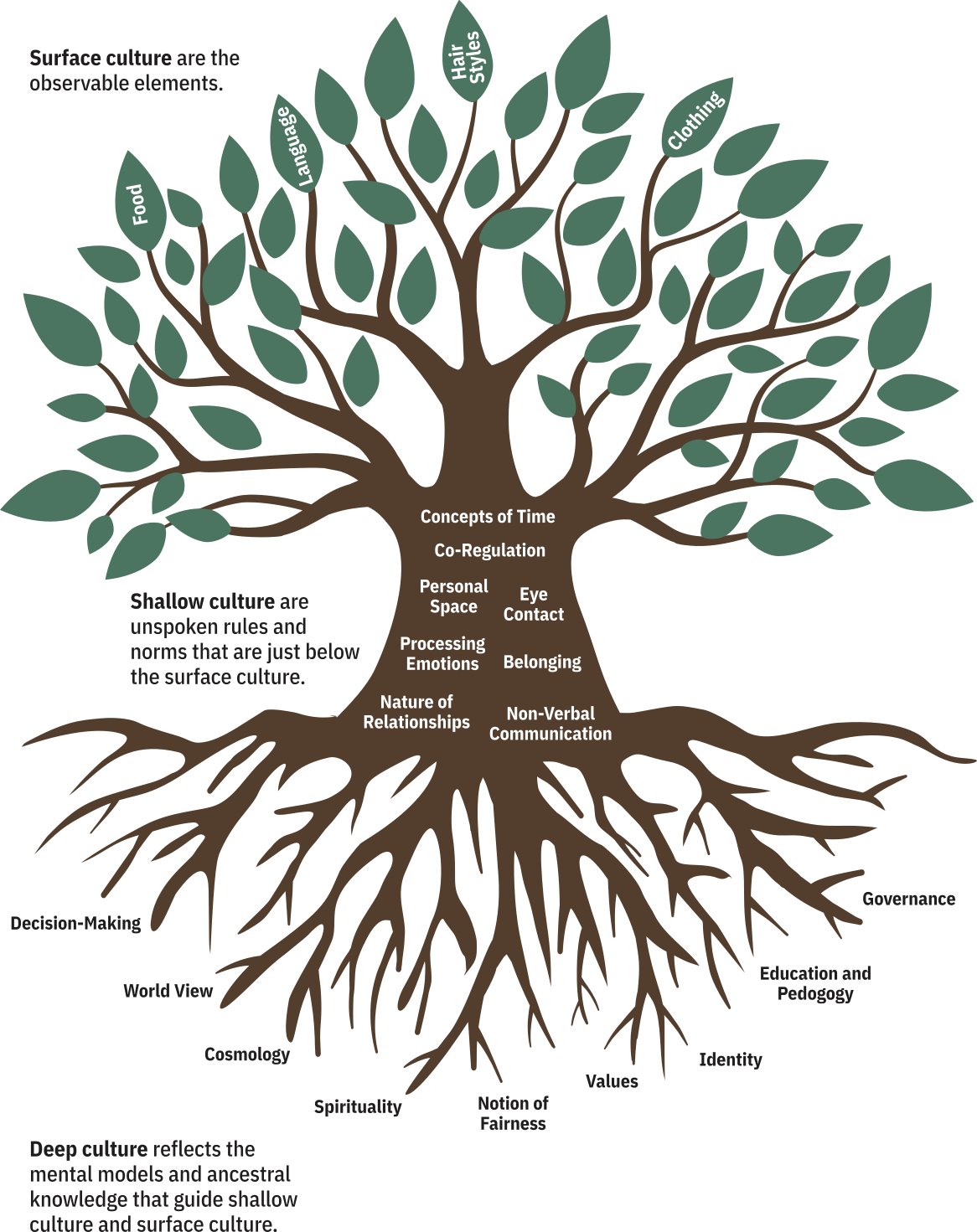
Think of culture as a tree with three levels—the roots that hold the deep beliefs and values that shape trust, thinking, and engagement; the trunk that represents how we learn to interact with others; and our visible expressions of our culture—the food, customs, and language.
To build real partnerships with students and families, we have to have cultural empathy. That starts by knowing your own cultural lens. Why? That means getting clear about the beliefs, values, and communication styles we bring into the classroom.
Culture shapes how we interpret student behavior. Knowing our own cultural reference points allows us to “widen our own aperture” for interpreting other cultural ways of being and learning.
Ask:
What cultural values shaped my ideas about effort, independence, or success?
How do I define “respect” or “participation,” and where do those definitions come from?
When a student disengages, what story do I tell myself—and what else could be true?
Sharpening your lens doesn’t mean having all the answers. It means being willing to question your defaults so you can respond with more insight and intention.
Build Brains, Not Just Bonds
Zoom out, reflect deeply, and get curious about what’s been normalized.
Now that you’ve reflected on your lens and your students’ cultural context, it’s time to zoom out.
Ask:
What routines or expectations have I inherited without questioning?
Do these practices align with how the brain learns best?
Where could small shifts remove barriers and support deeper engagement?
Awareness sharpens your vision—so you can stop running old scripts and start designing for equity. Awareness sharpens your vision—so you can stop running old scripts and start designing for equity.